Key Concepts: Visualizing Propaganda
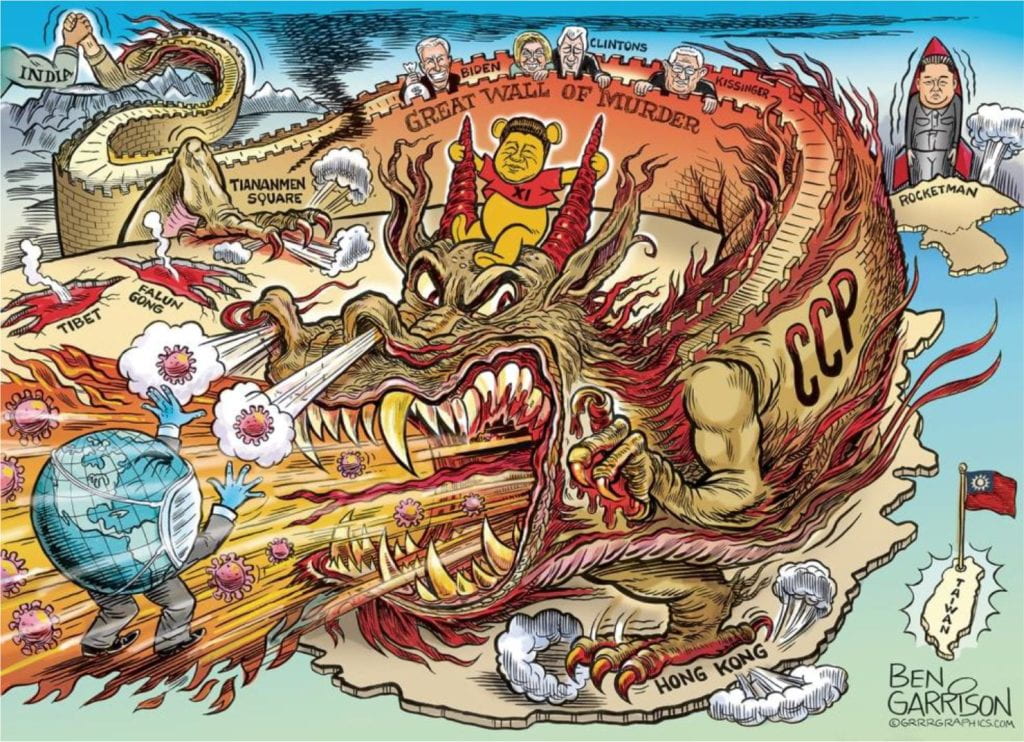
Antagonistic sovereignty: Antagonistic sovereignty refers to two types of divisive portrayals. The first is an in-out depiction, which alienates and demonizes individuals who are not citizens of the nation (“non-nationals”). The second is an ‘up-down’ depiction, targeting and vilifying the upper echelons of society, including the ’elites’ and the ’establishment’. [1]
Ethnopopulism: a blend of populism and ethno-nationalism. This approach emphasizes safeguarding the national identity, culture, and values, while advocating for the dominant ethnic group’s sole control over the nation’s sovereignty. [1]
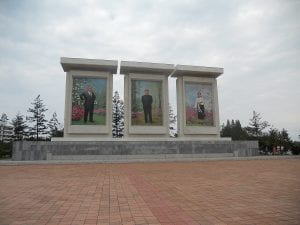
Heritage tourism: a type of tourism that focuses on visiting places that have special significance towards group identity. This can include visiting landmarks, museums, relics, cultural events, or exploring the natural environment or landscape of a particular area. [6]
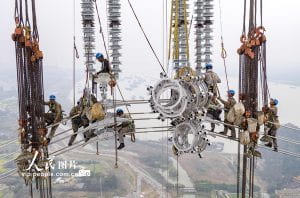
Humanitarian realism: a visual strategy that avoids overt, explicit depictions of political or commercial agenda, and aims to create a sense of empathy and understanding by depicting the “unadorned” reality of everyday human activities and struggles. [5]

Imagined properties of the nation: a matrix of beliefs and ritual practices connected to the concept of a nation state. Some of the imagined properties of the nation include territorial boundaries, sovereignty and self-determination, a shared collective memory and mythology. [3]
Inferiority complex (65): the use of messaging and images that play on people's feelings of inadequacy or self-doubt in order to manipulate their beliefs or behavior. This type of propaganda seeks to create a sense of fear or insecurity in individuals, with the aim of convincing them that they need the protection or guidance of a particular authority or ideology.
Parody: a work that imitates, exaggerates, or pokes fun at the style of another work. In visual parody, the original work is often transformed or distorted in humorous or satirical ways, creating a new and often subversive meaning. Visual parody can take many forms, such as caricatures, cartoons, or memes, and can be used to critique or challenge established ideas, institutions, or cultural norms.
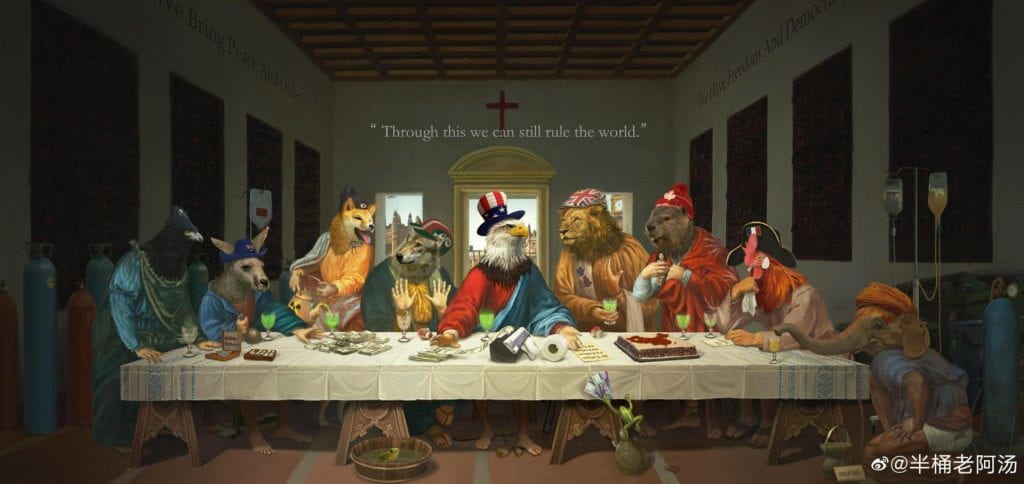
Ritualism: the use of symbolic actions and objects as meaningful repetitions, to create a sense of community and shared identity, and can be used to reinforce social norms, values, and traditions. Rituals in visual communication can be found in a wide range of cultural contexts, from religious ceremonies and political rallies to social media trends and advertising campaigns. [7]
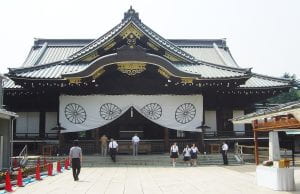
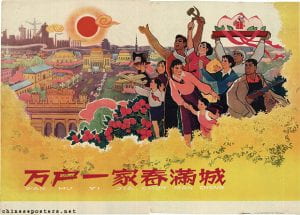
Votive icon: visual elements that are used to express gratitude for blessings received, or to ask for protection or assistance from a sacred source. They can also serve as a physical representation of a spiritual connection with a totemic concept. These images can take many forms, including buildings, figurines, paintings, jewelries, decorations, or abstract symbols. [2]
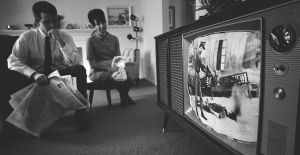
Voyeurism: the act of looking or observing a subject in a way that is considered taboo, often with a combined senses of pleasure and fear. In the context of visual propaganda, voyeurism can be deployed as a potent tool to draw the audience’s attention and create long lasting visual memories. It can take many different forms, ranging from subtle suggestions of sexuality to overtly explicit depictions of violence. [8]
Visual hegemony: the use of visual culture, such as art, advertising, and media by dominant groups or ideologies as means to maintain power and control over other groups or marginalized communities. Visual hegemony can be used to create and reinforce dominant narratives, stereotypes, and cultural norms that benefit those in power. However, it can also be subverted through the creation of alternative visual narratives and cultural forms, often in the form of parodies, that challenge dominant norms and values. [5]
Notes
[1] Jenne, Erin K. "Varieties of Nationalism in the Age of Covid-19." Nationalities Papers 50, no. 1 (2022): 26-44.[2] Chin, Gail F. “AS A VESSEL OF THE DHARMA, I AM A WOMAN: A VISUAL PARODY FROM NINETEENTH-CENTURY JAPAN.” Artibus Asiae 74, no. 1 (2014): 221-236.
[3] Anderson, Benedict, Lord Acton, Otto Bauer, and John Breuilly. Mapping the Nation. Verso Books, 2012.
[4] Ruiheng, Wang. “China’s image in US propaganda during the Pacific War era.” Chinese Studies in History 54, no. 1 (2021): 63-84.
[5] Svensson, Marina. “Visualising labour and labourscapes in China: From propaganda to socially engaged photography.” Made in China Journal 3, no. 3 (2018): 56-61.
[6] Ouellette, Dean J. “The tourism of North Korea in the Kim Jong‐un Era: propaganda, profitmaking, and possibilities for engagement.” Pacific Focus 31, no. 3 (2016): 421-451.
[7] Wang, Keren. Legal and Rhetorical Foundations of Economic Globalization: An Atlas of Ritual Sacrifice in Late-capitalism. Routledge, 2019.
[8] Sontag, Susan. “Memory as a Freeze-Frame: Extracts from ‘Looking at War’.” Diogenes 51, no. 1 (2004): 113-118.